Showing posts with label Keaton. Show all posts

Saturday, September 30, 2017

"American Assassin" doesn't score a kill, just inflicts a flesh-wound


The movie industry has been trying like mad to give the public another spy-franchise for almost two decades now. Three and two-thirds of the five Bourne flicks have been pretty good, but films starring Tom Clancy’s and Clive Cussler’s properties haven’t been able to catch hold long-term, and nothing else series-worthy has really even made it into production (those God-awful Taken movies don't count as "spy" movies, either). American Assassin almost suffered the same fate, as author Vince Flynn's estate was on the verge of regaining the film rights to his Mitch Rapp character, since nothing had been done with it.  The property had been in various stages of development for years, but Lionsgate Studios finally managed to get something done in the nick of time to keep the rights.  Did legal haste make cinematic waste in this case…?


The Maze Runner’s Dylan O’Brien plays Rapp, who proposes to his girlfriend while they’re frolicking on a beach in Spain.  Wouldn’t ya know it, that’s the exact moment a bunch of Islamic terrorists shoot up the beach, leading to some excessively melodramatic moments in which the girlfriend practically dies in Mitch’s embrace.  Eighteen months later, Rapp has become consumed with vengeance against those responsible for her death, and dedicates every waking moment to finding them, infiltrating them, and killing them.  The tragedy changes him from a guy who looks like he just walked off the set of "Teen Wolf" to a guy who looks like he's been living in the woods feeding off grubs and tree bark. Just as he's about to do everything he's been training himself to do, the CIA, led by Deputy Director Irene Kennedy (Sanaa Lathan) intervenes and takes him away.  Although he’s a loose cannon who can't take orders well or work with a team at all, Rapp is placed into a Black Ops program run by prickly Cold War vet Stan Hurley (Michael Keaton), who is prepared to chew up and spit out the new kid.


Though this setup is considerably generic stuff, eventually revealing a scheme to sell some enriched plutonium lifted from an abandoned Russian facility to the highest bidder, as if straight from the playbook of James Bond, it’s the initial character development for Rapp that provides the biggest letdown.  He’s unhinged and out of control, losing his temper and hurting a fellow sparrer at a gym, before negligently wandering in front of bullets at a shooting range.  He’s so focused on his personal vendetta that his own well-being is of no concern; Rapp is the kind of unappealing, unlikely anti-hero who would be dead or behind bars before the film even starts. This is something of a conundrum for a project that tries earnestly to appear serious and severe.

Yet that feigned sincerity is another problem with such a storyline. There’s little levity, virtually no comic relief, and lots of brooding and self-pity.  At times, the film devolves into a mindless actioner, which is perhaps where it is most comfortable, but even when it arranges a bit of commendable suspense, there are other faults that develop.  Most notable is the main villain, who remains a few steps ahead of the protagonists, simply because he’s supposed to.  Then it’s up to Rapp to accidentally save the day – not through impressive investigatory skills or level-headedness, but with the help of pure luck. No one uses intelligence to outmaneuver the opposition; everyone happens upon fortunate scenarios or are given specific opportunities to overcome calamities. “You let emotion cloud your judgment; never ever let it get personal,” orders Michael Keaton’s character, but then Mitch proceeds to conduct himself solely through uncontrollable emotions and deeply personal motivations, for which he realizes haphazard victory after victory.

All that having been said, I found the movie watchable primarily because of O’Brien’s and Keaton’s performances.  In his first truly adult role, O'Brien is very watchable, and is even believable at times, but still not TOTALLY believable as a guy who can whup an entire room of trained killers.  But hey, Matt Damon got better as Bourne went along, and O'Brien has the same potential.  Awesome right off the bat is Keaton, of course, going full-on Nicolas Cage-style bonkers as Hurley, who puts Rapp through Hell, takes torture like a man on vacation, and isn't afraid to take a literal bite out of terrorism.  Keaton is having way too much fun for the oh-so serious American Assassin, but his over-the-top portrayal is a welcome breath of fresh air into this stale script.

I can’t tell you American Assassin is a good film, but I won’t tell you it’s an awful one, either.  As the ending credits rolled, I told myself that I found it “okay.”  It could certainly have been made better with more time and more money, but ain’t that true of most movies? The excellent writer/ director Ed Zwick left this project early on in development, and I wonder how much better if would’ve been if he’d stayed on.  The film manages to rise above its modest $33 million budget for the most part, but the lack of true tentpole-feature funding starts to show about the time third act begins, as the necessary computer-generated imagery to depict what we’re shown during the climax is very, very below par.  

American Assassin has a title befitting of a movie made in the 1990s. Visualize it with an older cast - Steven Seagal starring as the guy taking on some of the worst the world has to offer.  Jon Voight as the CIA director. Ted Levine as the older recruit gone rogue. American Assassin is essentially a 1990s action movie, but devoid of the adrenaline and overall fun factor some of those films carried. Casting the oh-so-young O’Brien in so “serious” a role is meant to accurately portray the character as just-starting-out, and the sequels of which Lionsgate Studios dreams would show him aging and progressing through his career.  Logical thinking, in my opinion - I also hope they find better screenwriters for those sequels, too.

Monday, July 10, 2017

A Missing Element Returns in "Spider-Man: Homecoming"


Spider-Man is as important a character to the Marvel (comic-book) Universe as Superman and Batman are to the "Distinguished Competition."  It’s almost been a Lack-of-the-Room’s-Elephant situation that Marvel Studios has cranked out all these films over the last decade, forming a moving-pictures comic book series, and Spider-Man WASN’T a part of it (yeah, I know the deal about him and the X-Men - don’t lecture me). Whatever failure Sony may have imagined their last two Spider-Man movie attempts to be, the positive of them not making more than a billion and a half dollars off of them was that it led Sony to team up with Marvel Studios to produce new Spider-Man movies for them and allow Marvel to include them in their Cinematic continuity.  Everybody’s happy now… right…?

Look, Spider-Man: Homecoming is pretty darn good.  Let me get that on the page at the outset.  I really enjoyed it… for the most part… and I think the overwhelming majority of fans of the modern comic-book movie genre will lap it up and beg for more just like it.  I have a quibble or three, but I openly acknowledge those quibbles most likely won’t affect ninety percent of the audience that will see it, and I DO recommend you see it.  Allow me to cover the Good before I get to the very tiny amount of Bad.

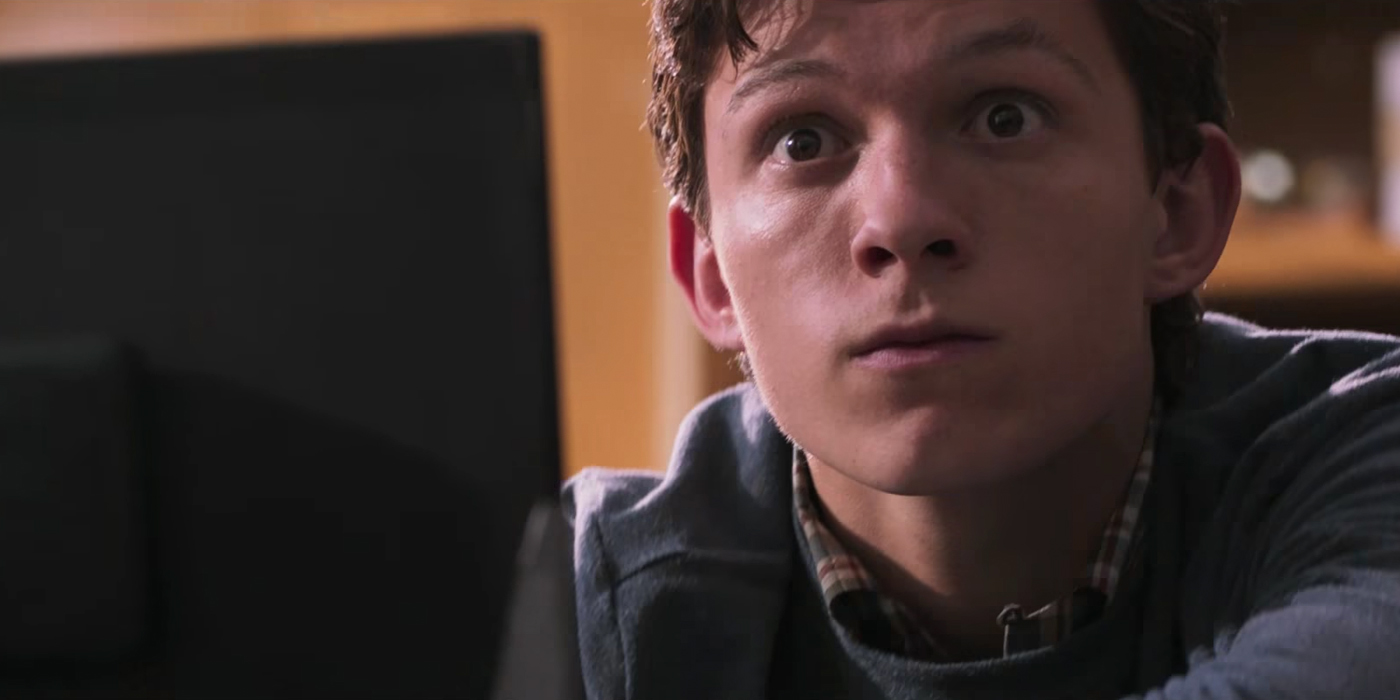
Advancing to a future landscape while turning back our hero’s biological clock, Spider-Man: Homecoming counts as a clean slate for Peter Parker’s web-slinger. Now nestled into the established Marvel Cinematic Universe after an outstanding debut in Captain America: Civil War, Tom Holland is a true teenaged Spider-Man, one that was never successfully conveyed by two previous franchises and their over-aged actors.  Aiming to please and bursting with youthful energy at every turn, director Jon Watts succeeds at making a movie that serves as a brand-new jumping-off point for a character that badly needed course-correction.  To give credit to the SIX (yeah, count 'em!) credited screenwriters on this movie, the oodles of rather convoluted plot detail are relatively clear, even if you’re not super-paying-attention.

The brightest quality of Spider-Man: Homecoming is certainly the lead actor. Tom Holland’s likeability in Captain America: Civil War wasn’t a fluke, and he has ample opportunity to continue to prove himself here.  He’s a fantastic young talent with excellent comic timing, and his Peter Parker is an incredibly well-written showcase for that.  He eases into the levity, the emotional heft and general fanboy excitement that comes with Tony Stark becoming his mentor.  Peter is a fully-realized character and is infinitely watchable.

Yes, Robert Downey, Jr. is here as Tony Stark, and even Jon Favreau’s Happy Hogan is here, anchoring the story in the Marvel Universe, but there are new faces, too.  Notably, Michael Keaton excelling as a formidable and indignant nemesis that fits this film’s urban confines and plays off the adult vs. kid dynamic.  For goodness sake, it’s Michael "Batman/Beetlejuice" Keaton!  After a lengthy cold streak of embarrassingly one-dimensional rage villains (until Kurt Russell’s Ego in Guardians of the Galaxy, Vol. 2), Marvel has now put forth two vivid antagonists with edge and complexity in a row.  Credit goes to the filmmakers for casting solid actors like Keaton and Holland, and more importantly, improving their material.   

However, Marissa Tomei as Peter’s Aunt May feels almost extraneous.  The relationship between Peter and May is a lot of fun to watch, and there are some entertaining moments between them, but she largely seems to be there just because Peter needs someone from whom to hide his identity.  She also seems to exist so that people can comment on how attractive she is.  This character definitely needed work.

Tidbits of Spidey’s comic history pepper the landscape of the movie, possibly serving as “Fan Service,” something of which I’m rarely a fan, but I found them to be suitable here, and they inject energy and flair to every corner of the film.  The emotive Steve Ditko-inspired eyes on Spider-Man’s mask are used to great effect (sorry, Deadpool, Spidey came before you and does it better).  Elder viewers (yes, like me) with an ear for classic cartoons will be overjoyed by the opening measures of Michael Giacchino’s robust orchestral take on Spidey’s cartoon theme replacing the Marvel Studios “fanfare” (at least for this picture - we’ll see if future Spidey movies retain this distinction).  There are others, but I’ll leave them for you to discover.

Now for the Bad… well, what little of it there is.  I’ve been reading Spider-Man comics on-and-off for forty years, and watching movies featuring the character for getting on twenty (...and keep the “Man-Child” wisecracks to yourself for now).  This version of Peter Parker is less cocky than the prior incarnations of recent years.  He is also rather whiny a lot of the time.  The Peter Parker I grew up with was certainly socially awkward in his high-school years, but he didn’t hunch over like a weasel whenever he had to get out of a social situation to go fight crime.  While Holland hunches over with sincerity and skill, I have to admit I am not enthralled by this variation on the teen superhero’s alter-ego.  Peter Parker as a nerd, I can roll with; Peter Parker as a dork, not so much.

Peter Parker was also special to me because he did it all himself - he made his own costume, he made his own equipment, he made his own excuses.  His now depending on Tony Stark for all of his toys and alibis was a bit hard for me to swallow.  I understand this is a new version of the character, aimed at a generation of which I’m not a part.  Fine.  I’ll get over it, but it’ll take some time.  We who believe in Rugged Individualism seem to be a dying breed in our “progressive” society, anyway.

The film also somewhat falls just a smidge flat in the action department.  None of the action set-pieces are especially bad, but they also don’t stand out as particularly memorable.  A sequence involving the Staten Island Ferry should be a definite standout, but even that is missing something.  This character has immense scope for impressive action sequences on which this film doesn’t quite deliver, but it is good that the stakes are scaled down appropriately for the character with the struggle being a far more personal one than we’re used to in the summer world-threatening blockbusters of recent years.

I understand my impressions here are probably going to be out of step with those of the masses of people who are going to attend this movie and have a good time with it.  This is a picture designed to provide bright, vivid thrills and breezy bits of amusement.  As someone who’s kind of wired to notice such things, I might say “This movie really wastes the talents of Hannibal Buress and Martin Starr,” whereas a less-concerned person will see these performers and say, “Oh, yeah, those guys are funny.”  Marvel movies are not concerned with altering your world-view or broadening your appreciation of the filmmaking process. They have done as they always do, produce a slightly better-than-average example of the genre, and it is totally worth seeing as such.  Being exposed to Spider-Man for a decade or two less than I happen to have been may help your enjoyment of it, though.

Thursday, August 22, 2013

Another look at Woody Allen's "Manhattan"

One of the things I find difficult in being a self-taught student of movies is when I can’t seem to understand or appreciate what other, supposedly more-learned folks than me see in the “Great Films.”  I understand the greatness of Kurosawa, Kubrick and Hitchcock, but I’ve never quite figured out what’s so great about Woody Allen.  I watched Interiors while I was in college and felt something close to disgust for all of the characters in that film, so I’ve avoided Allen’s movies in the years since.  However, a documentary about Allen that Turner Classic Movies ran not too long ago got me to thinking: maybe being a whole lot older would give me a different insight into his movies. Well, Manhattan is on several critics’ lists of the supposed “Best Films Ever Made,” so I found it on Netflix and gave it another shot.  Let it be known that while I still don’t get why Woody’s films are held in such high esteem, maybe getting older is making me more tolerant of them.

Manhattan follows the ordeals of Allen’s character, Isaac, a neurotic (gee, big surprise there), twice-divorced television writer who dreams of writing some great novel as a means of proving that he is a man of substance in a superficial world.  Or at least that’s what he pretty much tells us in the first three minutes of the movie.  His most recent ex-wife (Meryl Streep) has recently realized her homosexuality, left him for a woman and is now writing a book detailing her relationship with Isaac and her newfound happiness as a lesbian.  He’s currently dating Tracy, a 17-year old girl (Mariel Hemingway, in her film debut) who adores him, but he can’t bring himself to have deep emotions for a girl so young.  Isaac’s best friend, Yale (Michael Murphy) is somewhat happily married, but has taken up a dalliance with Mary (Diane Keaton), a horribly insecure writer who puts forth an intellectually snobbish front because that’s just how one behaves in New York.

Isaac spends most of his time with Tracy explaining to her how their relationship can’t possibly last.  Yale and Mary spend most of their time wracked with guilt over the adulterous nature of their relationship.  Isaac’s ex-wife spends most of her time dwelling on how lousy her relationship with Isaac was.  Mary spends most of her time with Isaac explaining how awful she is at relationships in general, yet wishing she could find one.

In much simpler and fewer words, this is a movie filled with screwed up people, and that sounds like just about every one of Allen’s films since Annie Hall.  Of course, real life is filled with screwed-up people and life is what happens when you’re trying to overcome your problems, a shocking realization to which I’ve come in my advanced age.  Allen’s screenplay, written with Marshall Brickman, is filled with wonderfully entertaining dialogue that harkens back to his stand-up comic days.  The film does have a dry sense of humor about the problems these people have, but perhaps my Bible-Belt upbringing keeps me from having a lot of sympathy for the New York characters with which Allen populates his films.  The characters here, with the possible exception of Yale’s wife (Anne Byrne, who was once Mrs. Dustin Hoffman), are all lacking a basic understanding of emotional fidelity, something I learned from Mom and Dad, and in Sunday School.  Maybe New York synagogues don’t do as good a job, I don’t know.

Allen is a wonderfully gifted writer of dialogue.  It’s ridiculous not to acknowledge that.  In the above-mentioned documentary, he states that everything else he does as a filmmaker is merely as a means to bring his writing to life, and that he is first and foremost a writer.  I’ll even go so far as to grant that he is a better-than-average director.  His choice of black-and-white photography for Manhattan was perfect for this story, as New York is the most black-and-white of cities, and the characters here all lack an understanding of the black-and-white issue of emotional commitment.  He laces the soundtrack with the music of George Gershwin, who filled Tin Pan Alley with the sounds of his songs during the Roaring Twenties, and songs like “Someone to Watch Over Me” and “Embraceable You” cast a sense of love’s simplicity over the lives of these people who must complicate everything they feel.  They wander through lovely scenes of horse-drawn carriage rides in Central Park and watching the sun rise over the 59th Street Bridge while they bemoan their existence.

Is it a good movie?  Yes, I think it’s a wonderfully made movie with a fairly interesting story, but I can’t recommend it.  The story ends leading us to believe that the only character who understands the human heart is the one we should least suspect of having such wisdom.  While Isaac does come to a realization about his deepest feelings by the end, Manhattan, in typical Allen fashion, doesn’t give us any hope that any of us deserve to be loved.  I, for one, need that from my movie-watching experience.  I guess I’m just too much the sucker for happy endings to constantly expose myself to Allen’s world, where there aren’t any.  The real world is enough like that as it is.