
Spider-Man is as important a character to the Marvel (comic-book) Universe as Superman and Batman are to the "Distinguished Competition." It’s almost been a Lack-of-the-Room’s-Elephant situation that Marvel Studios has cranked out all these films over the last decade, forming a moving-pictures comic book series, and Spider-Man WASN’T a part of it (yeah, I know the deal about him and the X-Men - don’t lecture me). Whatever failure Sony may have imagined their last two Spider-Man movie attempts to be, the positive of them not making more than a billion and a half dollars off of them was that it led Sony to team up with Marvel Studios to produce new Spider-Man movies for them and allow Marvel to include them in their Cinematic continuity. Everybody’s happy now… right…?
Look, Spider-Man: Homecoming is pretty darn good. Let me get that on the page at the outset. I really enjoyed it… for the most part… and I think the overwhelming majority of fans of the modern comic-book movie genre will lap it up and beg for more just like it. I have a quibble or three, but I openly acknowledge those quibbles most likely won’t affect ninety percent of the audience that will see it, and I DO recommend you see it. Allow me to cover the Good before I get to the very tiny amount of Bad.

Advancing to a future landscape while turning back our hero’s biological clock, Spider-Man: Homecoming counts as a clean slate for Peter Parker’s web-slinger. Now nestled into the established Marvel Cinematic Universe after an outstanding debut in Captain America: Civil War, Tom Holland is a true teenaged Spider-Man, one that was never successfully conveyed by two previous franchises and their over-aged actors. Aiming to please and bursting with youthful energy at every turn, director Jon Watts succeeds at making a movie that serves as a brand-new jumping-off point for a character that badly needed course-correction. To give credit to the SIX (yeah, count 'em!) credited screenwriters on this movie, the oodles of rather convoluted plot detail are relatively clear, even if you’re not super-paying-attention.
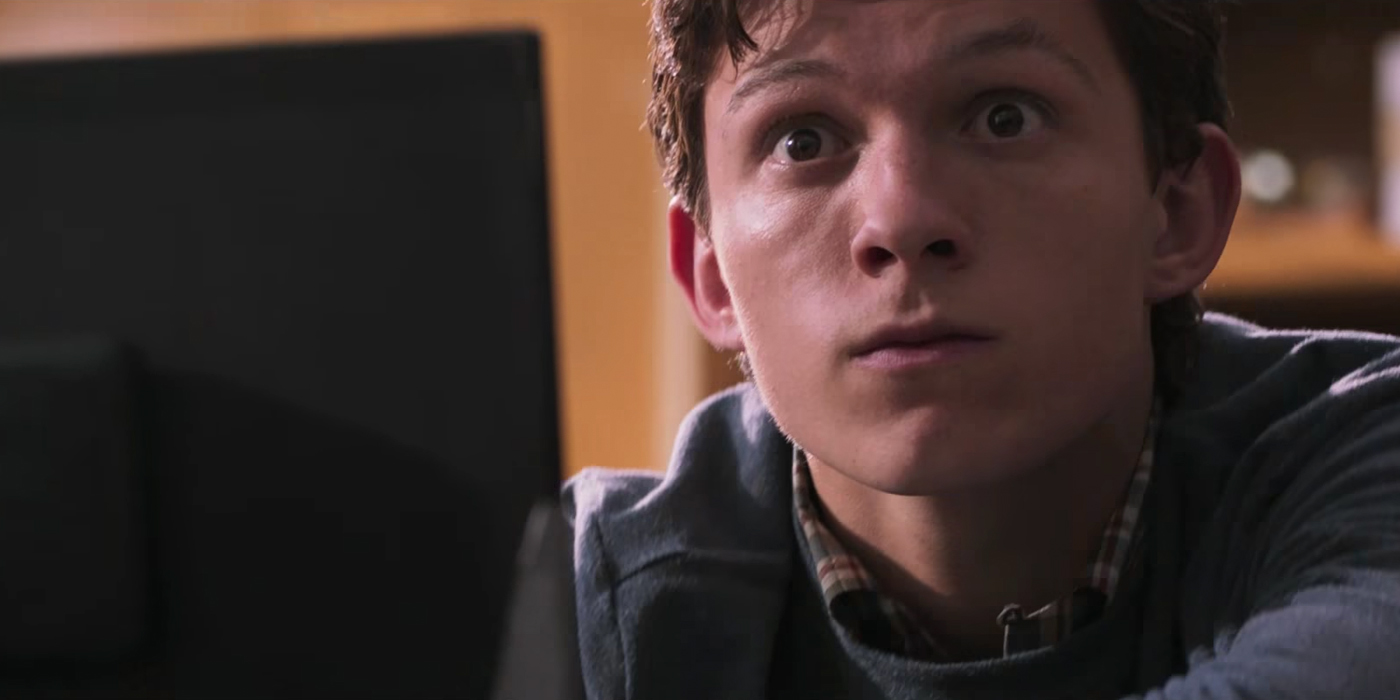 The brightest quality of Spider-Man: Homecoming is certainly the lead actor. Tom Holland’s likeability in Captain America: Civil War wasn’t a fluke, and he has ample opportunity to continue to prove himself here. He’s a fantastic young talent with excellent comic timing, and his Peter Parker is an incredibly well-written showcase for that. He eases into the levity, the emotional heft and general fanboy excitement that comes with Tony Stark becoming his mentor. Peter is a fully-realized character and is infinitely watchable.
 Yes, Robert Downey, Jr. is here as Tony Stark, and even Jon Favreau’s Happy Hogan is here, anchoring the story in the Marvel Universe, but there are new faces, too. Notably, Michael Keaton excelling as a formidable and indignant nemesis that fits this film’s urban confines and plays off the adult vs. kid dynamic. For goodness sake, it’s Michael "Batman/Beetlejuice" Keaton! After a lengthy cold streak of embarrassingly one-dimensional rage villains (until Kurt Russell’s Ego in Guardians of the Galaxy, Vol. 2), Marvel has now put forth two vivid antagonists with edge and complexity in a row. Credit goes to the filmmakers for casting solid actors like Keaton and Holland, and more importantly, improving their material.

However, Marissa Tomei as Peter’s Aunt May feels almost extraneous. The relationship between Peter and May is a lot of fun to watch, and there are some entertaining moments between them, but she largely seems to be there just because Peter needs someone from whom to hide his identity. She also seems to exist so that people can comment on how attractive she is. This character definitely needed work.

Tidbits of Spidey’s comic history pepper the landscape of the movie, possibly serving as “Fan Service,” something of which I’m rarely a fan, but I found them to be suitable here, and they inject energy and flair to every corner of the film. The emotive Steve Ditko-inspired eyes on Spider-Man’s mask are used to great effect (sorry, Deadpool, Spidey came before you and does it better). Elder viewers (yes, like me) with an ear for classic cartoons will be overjoyed by the opening measures of Michael Giacchino’s robust orchestral take on Spidey’s cartoon theme replacing the Marvel Studios “fanfare” (at least for this picture - we’ll see if future Spidey movies retain this distinction). There are others, but I’ll leave them for you to discover.
Now for the Bad… well, what little of it there is. I’ve been reading Spider-Man comics on-and-off for forty years, and watching movies featuring the character for getting on twenty (...and keep the “Man-Child” wisecracks to yourself for now). This version of Peter Parker is less cocky than the prior incarnations of recent years. He is also rather whiny a lot of the time. The Peter Parker I grew up with was certainly socially awkward in his high-school years, but he didn’t hunch over like a weasel whenever he had to get out of a social situation to go fight crime. While Holland hunches over with sincerity and skill, I have to admit I am not enthralled by this variation on the teen superhero’s alter-ego. Peter Parker as a nerd, I can roll with; Peter Parker as a dork, not so much.
 Peter Parker was also special to me because he did it all himself - he made his own costume, he made his own equipment, he made his own excuses. His now depending on Tony Stark for all of his toys and alibis was a bit hard for me to swallow. I understand this is a new version of the character, aimed at a generation of which I’m not a part. Fine. I’ll get over it, but it’ll take some time. We who believe in Rugged Individualism seem to be a dying breed in our “progressive” society, anyway.
 The film also somewhat falls just a smidge flat in the action department. None of the action set-pieces are especially bad, but they also don’t stand out as particularly memorable. A sequence involving the Staten Island Ferry should be a definite standout, but even that is missing something. This character has immense scope for impressive action sequences on which this film doesn’t quite deliver, but it is good that the stakes are scaled down appropriately for the character with the struggle being a far more personal one than we’re used to in the summer world-threatening blockbusters of recent years.
I understand my impressions here are probably going to be out of step with those of the masses of people who are going to attend this movie and have a good time with it. This is a picture designed to provide bright, vivid thrills and breezy bits of amusement. As someone who’s kind of wired to notice such things, I might say “This movie really wastes the talents of Hannibal Buress and Martin Starr,” whereas a less-concerned person will see these performers and say, “Oh, yeah, those guys are funny.” Marvel movies are not concerned with altering your world-view or broadening your appreciation of the filmmaking process. They have done as they always do, produce a slightly better-than-average example of the genre, and it is totally worth seeing as such. Being exposed to Spider-Man for a decade or two less than I happen to have been may help your enjoyment of it, though.
