Friday, January 6, 2017

"Sing Street" crafts a catchy Coming-of-Age tune

Okay, indulge this old fogie a moment of nostalgia - we all thought John Cusack holding that damn boombox over his head, blaring Peter Gabriel’s “In Your Eyes” outside of Ione Skye’s window in Say Anything… was so damn cool.  What better way for a guy of that age to let a girl with whom he’s incredibly smitten know that, despite not even knowing who he really is himself, he’s sure she’d be incredibly into him if she just gave him a chance.  

Most of us poor males have been there, or wish we had been: you’re young and you think the only way to get the attention of The Girl is to impress them with some talent or another, assuming you even have one.  Wouldn’t it be super if you could start a band?  Yeah, that would do it!  Problem is, your band would probably suck, cover songs don’t really impress girls, and nobody would show up for your gigs (assuming you could get any), but if you can just get her to see you play, just once, it would all be worth it.  Dream on, you poor adolescent schmuck...

Cut to the present - today’s youth may have been given their own version of John Cusack, and even though this one may be a bit more low-key than old Lloyd Dobler was, I believe 15-year old Conor Lawlor’s (newcomer Ferdia Walsh-Peelo) solution in Sing Street may be a bit ballsier. I mean, why stand there blasting someone else’s love song at The Girl when you can write a new one?  Conor does just that when he spots Raphina (a luminous Lucy Boynton), deciding the instant he sees her that he’ll impress her with the band he hasn’t even formed yet, fully confident the details will work themselves out.

This is the predicament in which Conor finds himself at the beginning of the latest film from writer/director John Carney (Once, Begin Again), a filmmaker who seems to be specializing in musical fables.  We first see Conor in his bedroom, plucking on his guitar as his parents argue outside, turning their shouts into jokey song lyrics.  It’s 1985 in Dublin, and Conor’s life is about to fall apart; not only are Mom and Dad on the verge of divorce, but hard economic times also force them to move Conor to a different, more hardscrabble (and free) school.  He has no friends (the campus bully even threatens him with a slingshot on the first day), no real prospects, and the cruel headmaster’s top priority seems to be the dress code.

Then he spots the mys-terious Raphina standing outside the schoolyard. All Conor knows about her is that she’s an aspiring model with an older boyfriend, but somehow, he has enough confidence to get her number under the pretense of having her appear in a music video for a band that doesn’t even exist yet.  With the assistance of 14-year old self-proclaimed “manager” Darren (Ben Carolan), Conor sets to it, rounding up a group of kindred spirits with an ease that strains believability. Sure, it’s total fantasy, but Carney executes this scenario, along with so many others throughout the movie, with such spirit and earnestness that one can’t help but be taken in by it.

Through a series of changing outfits and musical influences, the film charts Conor’s musical and personal growth, his compli-cated relationship with Raphina, and how he tries to keep an even keel kept on the home front.  In the absence of any meaningful parental guidance – his parents are peripheral figures in the story – his stoner older brother Brennan (Jack Reynor) provides musical education and some Miyagi-like wisdom (of a sort), and proves much more aware than his slacker appearance would suggest with gems like, “No woman can truly love a man who loves Phil Collins.”  Based on Carney’s own experiences as a boy in Dublin, the screenplay digs deeper than the usual universal love story to comment on Irish life in 1985 and sets it to a soundtrack that hits all the right notes for those with fond memories of The Cure, Joe Jackson and Elvis Costello.

The songs scattered about the soundtrack, many of which were written especially for the film, feel totally at home in the mid-80s time-frame (I dare you to hear the band’s first composition early in the film and not hear Duran Duran’s “Girls on Film” in the back of your head).  Carney himself co-wrote all the new compositions with veteran composer Gary Clark, and these tunes add so much to the old-fashioned and optimistic vibe that just exudes from the screen that I can’t imagine the movie working without them.

It’s the kids on screen that make the movie, though. Sing Street wonderfully communicates the exuber-ance and enthusiasm of its young cast, most of whom are non-actors, and the natural-ness of all their performances is an absolute wonder.  The chemistry that Walsh-Peelo and Boyton share would make the movie watchable on its own, but Mark McKenna’s performance as Conor’s songwriting partner Eamon matches theirs, and all of the youths in the band, even with smaller roles, deliver incredibly believable performances.

This movie actually brought some of that awful teen angst so many of us guys felt during those years of Swatch watches and Trapper Keepers crashing back to mind, yet it still made me smile and remember those years with fondness.  In my recent review of The Edge of Seventeen, I said that film was one which John Hughes would wish he’d have made were he still alive.  Sing Street could also fit that bill.

Cue Lloyd Dobler and that boombox now.

Tuesday, December 20, 2016

“Assassin’s Creed” needs a mercy killing...

Oh, how video gamers (myself included) have long awaited this movie. THIS was the one that was going to break the “curse” of the video game-movie.  How could this possibly go wrong?  Take Two Oscar winners and an Oscar-worthy lead headlining the cast, and throw in $130 million and such a wildly popular game property, and surely you’ve got a slam-dunk, right?  I mean, there’s no way a capable filmmaker like Justin Kurzel could screw up this thing, right?  RIGHT???

Yup, you guessed it - they screwed it up.

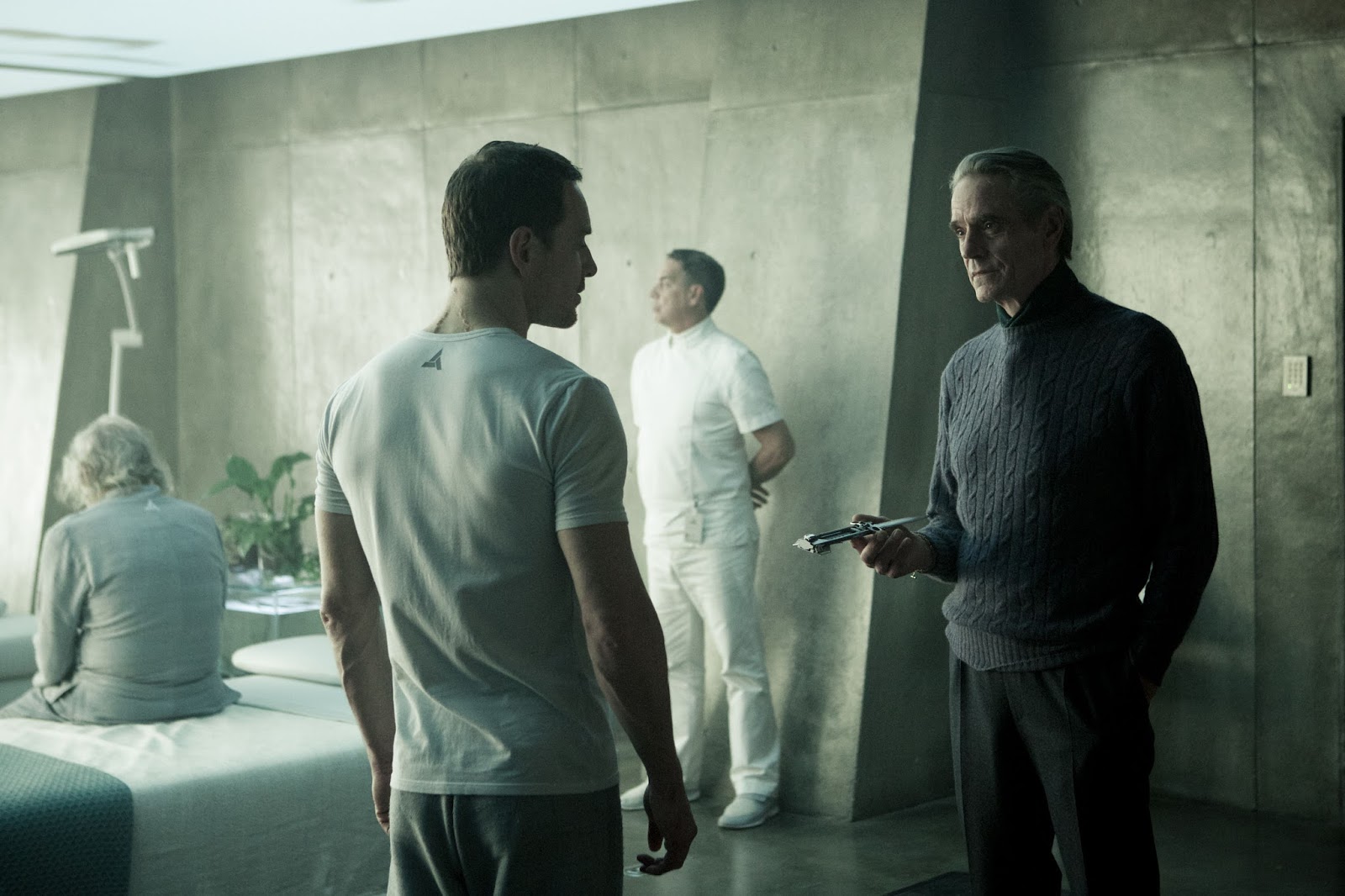
The story of Assassin's Creed revolves around Callum Lynch (Michael Fassbender), a convicted murderer who is saved from a death sentence by the mysterious Abstergo Indus-tries, who give him a second chance at life if he aids them in a scientific “endeavor” (why he was on Death Row is never adequately ex-plained to us, other than Callum’s mumbling about the person he supposedly murdered was “a pimp” - I guess that clears up all the moral ambiguity).  Lynch is made to enter a device called The Animus, which allows him to access genetic memories contained within his DNA of distant relative Aguilar de Nertha (also played by Fassbender), a mysterious member of a secret society in 15th-century Spain.  It seems Aguilar hid a relic of some sort that would enable the nefarious Templars to remove Free Will from mankind, allowing them to exert more control over human destiny (I’m not making this up, people…), and by having Lynch use the VR-like Animus to vicariously re-live Aguilar’s experiences, the Templars hope to learn this relic’s location.

If Assassin’s Creed had been made as a period piece, with Aguilar as the hero, it may well have worked as a kind of heightened period epic – something like 300 meets Kingdom of Heaven.  The movie’s best sequences are the Spanish Inquisition-set action scenes, inventively choreographed and beauti-fully executed.  The game-inspired brand of wushu-meets-parkour in these scenes delivers some genuinely awe-inducing feats - a mid-carriage-chase wall-flip and a dead-eye ricochet shot wowed me, and helped to partially compensate for the dramatic lulls.  The period production design and the thundering score by Kurzel’s brother Jed are better than the movie deserves, but even these sequences could have fared better, as Kurzel falls prey to the hyper-editing and spasmic-camera movements that so many action movies seem to suffer from anymore.

Sadly, we only spend three all-too-brief sequences in that period, with the rest of the film being stuck in this murky-blue antiseptic scien-tific facility where everyone has that slit-eyed counten-ance that ensures you know they’re up to no good. Fassbender is a dour, dull hero in both temporal spheres, and Cotillard and Irons both seem to just float through their roles, with an apparent lack of interest that I couldn’t tell was an acting choice or actual boredom on their part.  The cast aren’t aided by the humorlessness of the screenplay, which treats all this hooey with a degree of seriousness that makes it all the more ludicrous.  Even possibly interesting secondary characters get the short end of the screenplay - Charlotte Rampling, another distinguished actor, pops up briefly as the Templars’ head modern head honcho, but has a criminally minimal amount of screen time.

Throughout the movie, Kurzel treats the goofy material with a dogged earnestness he didn’t feel compelled to lavish on his Shakespeare (last year’s Macbeth), and whatever grandeur might have existed in Andy Nicholson’s production design or Sammy Sheldon Differ’s costumes is pretty much lost in the images, which are maddingly murky even in 2D format (one can only imagine they’ll be even darker and more impenetrable in 3D).

It’s so frustrating to get such a “blah” film as this, while seeing that there are good things about it.  I understand fifteen hours of playing a video game is not the same thing as making a 110-minute movie, but this movie has things in it that convince me it could’ve been done better than this.  Alas, we still await the “good” video game-movie, ‘cause this one ain’t it, folks. Assassin’s Creed gets the style of the video games so right, yet unlike those games, it fails so miserably in creating characters worth caring about, or telling us a story we could even halfway swallow.

Friday, December 16, 2016

“Rogue One: A Star Wars Story,” and Hallelujah, it’s 1977 all over again!

In the interest of Full Disclosure, I inform you, Dear Reader, that while I attempt to remain objective in all my reviews, I have acknowledged in the past, and do so again here now, that my objectivity may be called into question regarding some movies.  Of course, anything with “Star Wars” in the title fits that criteria, so with that in mind, here we go...

We’ve all seen the “crawl” that opens the original Star Wars a hundred times, telling us how, just before that massive Star Destroyer captures that poor little Rebel ship, there was a battle during which Rebel spies stole the schematics for the Death Star.  That one line of text, scrolling before our eyes forty years ago, is the seed from which Rogue One: A Star Wars Story sprouted.  This story revolves around Jyn Erso (Felicity Jones), a loner and thief who is recruited by Rebel Alliance intelligence officer Cassian Andor (Diego Luna) to investigate a bit of intelligence provided by Imperial defector Bodhi Rook (Riz Ahmed).  Rook is a cargo pilot who claims to have been given information by a source from within the Empire’s newest weapons project, scientist Galen Erso (Mads Mikkelsen), who happens to be Jyn’s father.  That’s merely where things kick off, and doesn’t even begin to describe the scope to which the story expands, not to mention the other characters who appear, such as a blind acolyte of the Force and his brutish but wily partner (Donnie Yen and Jiang Wen), sardonic security droid K2-SO, voiced by Alan Tudyk, and a chilling antagonist who, in Ben Mendelsohn’s peerless, humanizing performance, becomes more threatening as he becomes more pitiable.

Here’s where objectivity gets tossed out the window - I loved this film.  Sure, I was inclined to love it just because the phrase “Star Wars” is there, but my experience seeing it last night was all the more fantastic because it’s so rare that a movie turns out to be exactly as wonderful as I hoped it would be.  The decision to explore the space “between the lines” of the series and its story makes Rogue One such a novel idea, and a worthy addition to the Star Wars canon.  It explores and deconstructs the original mythology created by George Lucas while respecting it enough to honor the spirit and sentiment of it. Rogue One is what I have wanted in a Star Wars film for the last decade - something NEW, but in a familiar universe.  Director Gareth Edwards and screenwriters Chris Weitz and Tony Gilroy have given us something that actually feels like what Lucas put on celluloid forty years ago, without the stilted dialogue expounding on morality and politics he put on digital hard drives twenty years after that.  This is a crowd-pleasing film if ever there was one, with thrills, spectacle and a loveable cast of characters.  

Lucas’ original Star Wars took traditional genres, like samurai movies and Westerns, and riffed on them, layering in aliens, lasers and magic, and Rogue One harkens back to this alluring approach.  This time around, though, it’s World War II movies to which Edwards pays tribute, and with far more than lip service.  With their blatant anti-fascism and bad guys decked out in Nazi-inspired regalia, the Star Wars films have always borne reminders of the evils of the Third Reich.  Here, the galaxy across which the film takes place offer endless variants of terrain, so that Rogue One may find not just thematic, but visual backdrops akin to each of World War II’s main theaters of combat.  The desert hideout of hardline militant rebel Saw Gerrera (Forest Whitaker) and his crew could easily be the North Africa of The Desert Fox or Sahara (the one with Humphrey Bogart, not Matthew McConaughey), while a thrilling, close-quarters skirmish in a small trading outpost recalls the French village combat scenes of Saving Private Ryan or Band of Brothers.  Even the massive and masterfully staged climactic battle takes place on a planet of tropical jungles and beaches, and as men and machines and palm fronds all get churned up together, it’s hard to not recall the Guadalcanal of The Thin Red Line.

Some more cynical, jaded and, quite frankly, sad individuals may point to the first act not devoting enough time to developing the characters, or that with the Star Wars saga being so ingrained in our collective minds that the drama here is muted by our knowing how it will end, or that a few winks and nods to past/future moments in Star Wars lore may be excessive.  Those sad sacks might screech that using computer-aided imagery to help include some characters we never thought we’d see again could be seen going overboard.  To all of that, I say "Hogwash."

If Rogue One existed all on it’s own, they might would have a point, but it does NOT exist in a vacuum. Rogue One is not meant to stand on its own - it IS part of a narrative thread.  Our knowing how it will end is part of the film’s beauty - knowing the ends these characters must inevitably meet, yet caring enough about them to continue hoping against hope that the end will surprise us (come to think of it, I don’t remember getting much time to learn about all of The Dirty Dozen, either, but they all sure seemed like fun guys. But I digress…).  Combine these memorable characters with awesome visuals and thrilling action, and you’ve got a movie that is well at home within the “original” series and one that is definitely worth repeat viewings.

Sure, The Force Awakens was not a perfect film, but I love it because it was good enough, and it served it’s purpose: to bring the Episodes IV through VI cast and storyline back to life and rejuvenate the movie-portion of the Star Wars universe for mass audiences.  Rogue One also serves it’s purpose: to demonstrate that there are stories in this universe to tell that don’t depend on the same cast of characters movie audiences have been following these past forty years.  That it does so in such spectacular fashion makes it worthy of its place immediately before that moment in 1977, when that little Rebel ship was trying to make its escape...

Sunday, November 27, 2016

"The Edge of Seventeen" makes Teen Angst hip again


Movie “coming-of-age stories” are one of those tropes that many film fans just can’t seem to evolve beyond.  I admit I thought I had, but then I saw The Edge of Seventeen, and I have to admit that it seems the place in my heart John Hughes’ movies so effectively touched so many times is still there inside me.  The best of these flicks are capable of transporting we old farts back to a time of life that many of us now view through rose-colored glasses.  High school was never easy, with those four mid-teenage years representing a cauldron of raging hormones, exploding insecurity and academic pressure.  Not only has that not changed, I’m sure it’s even harder now than it was when I endured it.  It’s a wonder that anyone survives them.

With a smart, perceptive script from first-time director Kelly Fremon Craig and a wonderful lead perfor-mance by Hailee Steinfeld, The Edge of Seventeen re-minds us of the good, the bad, and the ugly of this life-phase through which we all must pass.  The movie gives Steinfeld a chance to equal her brilliant turn from 2010's True Grit, and she most certainly succeeds, portraying 17-year old Nadine, an 11th-grader who, in typical Molly Ringwald-fashion, can't seem to connect with people her own age.  To add insult to injury, she has only one best friend named Krista (played by Haley Lu Richardson), who through a late-teen version of a Series of Unfortunate Events, ends up falling for Nadine’s popular star-jock brother Darian (Blake Jenner).  Feeling a sense of betrayal only a teenaged girl could feel, and getting no sympathy from her seemingly bipolar mother (Kyra Sedgwick), she ends up going to one her teachers (Woody Harrelson), whose apparent lack of empathy is all the more hilarious because of its subtlety.

Oh, sure, there are other Sixteen Candles-ish tropes here, such as the borderline nerdy guy who in smitten by our heroine, but Nadine is so wrapped up in her own problems and superficial lust for another dreamboat that she can’t completely see it. Nadine’s actually kind of a brat (yep, that feels true to the age, too), but Steinfeld’s charisma and the script’s humor somehow make her misdirected rage and blundering attempts at independence endearing.  It reminds us of how the brave leaps and big stumbles every teen makes can sting, as she tries (we tried) to figure out how to be herself (ourselves).

The biggest key to the film’s success is that Fremon Craig’s script and direction don’t depend on slapstick to propel the story.  It also helps that the direction is conservative, not drowning the screenplay in references and teenage lingo (I’m looking at you, Juno).  Her script doesn’t adhere to the clichés, but softens them and makes them a bit more real and believable.  There’s a comfort in the familiarity on which a coming-of-age story such as this thrives, but that comfort is totally dependent on our being made to care for the characters, and I never got the impression that any of these kids were complete characitures, even when the story sort of demanded that they be one.

The ad campaign for the film touts it as the next The Breakfast Club or Fast Times at Ridgemont High, and while those compari-sons certainly aren’t off base, I think any conver-sation about this movie should be more about Hailee Steinfeld and how marvelous she is in this role. Of course, the rest of the cast are also quite good (being the old fart I am, I had no clue Blake Jenner was anything other than a reality-show joke -- I was floored at how good he is in this film), but this film is fueled by the central performance.  As Nadine comes to grips with everyone else moving on, with the whole world not being about her, she moves on from being a little annoying to completely sympathetic. Steinfeld handles this transition wonderfully.

It’s a shame a film such as The Edge of Seventeen is slapped with an R-rating, the justification for this be-ing a few “F”-bombs and sexual innuendoes, most of which are seen in larger quantities in other far-less meaningful PG-13 teen comedies.  I would hope parents could (and would) see this film with their teenagers.  Maybe the old fogies could be re-minded how difficult this time in their children’s lives might be, and the teens might see that there is hope they’ll survive the Hell of Adolescence.

Saturday, November 12, 2016

"Arrival" Knows How to Make an Entrance

In the first season of HBO’s True Detective, Matthew McConaughey’s character groaned about how time was not a line we all travelled, but was a “flat circle,” without beginning or end.  In Star Trek V: The Final Frontier, Mr. Spock posited to Captain Kirk that, once we’re all through rowing the proverbial boat down the stream, life might actually be just a dream.  While I’m all but certain director Denis Villeneuve had neither of those instances in mind while making his latest film, Arrival, he presents us with something of a combination of those two concepts, asking his audience to wrap our heads around the almost-infinite meanings of the sentence, “there is no time."

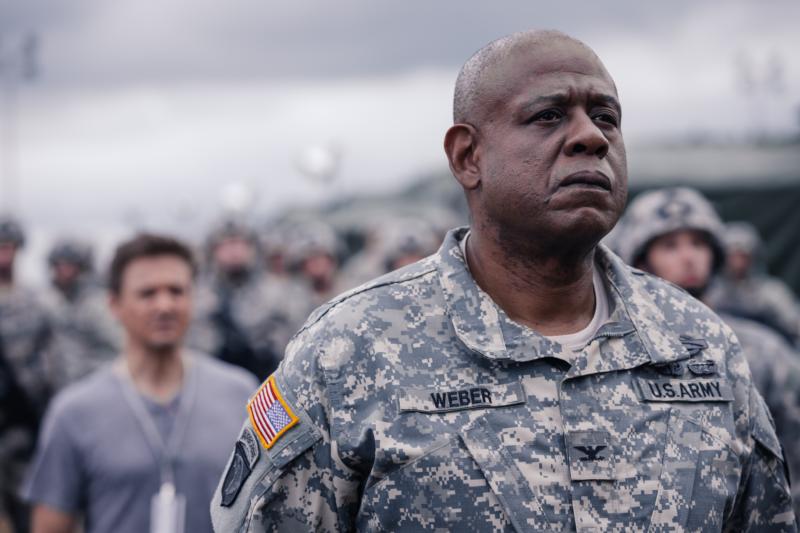
Dr. Louise Banks (Amy Adams) is a professor who teaches the finer points of language.  When twelve alien spacecraft touch down at different points all over the world, it isn’t long before the U.S. military comes calling on her to help communicate with the visitors.  She insists on doing things on-site, but Colonel Weber (Forest Whitaker) isn’t going for it.  He eventually finds himself with no other option and brings Banks to the American site of the craft in Montana.  Joined by astrophysicist Ian Donnelly (Jeremy Renner), Louise jumps right in to meet with the creatures.  The process is slow, but increasingly effective, though the team find themselves up against a world-clock as other foreign leaders are growing more frustrated and impatient for results, leaning toward a much harsher course of action to learn the visitors’ purpose. 

Arrival is the most intimate of sci-fi films, with the emphasis on “sci-” rather than the “fi.”  While the semantics of the film aren’t completely original (there are pangs of Interstellar roaming around here), the execution is so sublime that you can’t help but fall into the intellectual puzzle the movie presents.  With Sicario, Villeneuve proved himself a master at building suspense and balancing audiences on a razor-thin edge, and those same sensibilities are applied to this quieter, more intimate story in a remarkably effective way.  Catching our first glimpse of the alien creatures or witnessing Louise and Ian's first successful attempt at communication are incredibly gripping moments, and we share every bit of their fear, anxiety, excitement and relief.

The film is strongest when offering parallel cutaways to Dr. Banks as a mother, which mixes nicely with ruminations of language, time and even déjà vu.  It may dwell too much on the drama of translation long after making its point, however, and is bound to test the patience of some. There’s even a needless subplot that detracts from Dr. Banks’ perspective, which Villeneuve makes great efforts to present, featuring a soldier watching too much crackpot propaganda on the internet.  If this dramatic device had not been an all-but exact copy of the plot twist used in Robert Zemeckis’ Contact, Arrival might would take its place alongside 2001: A Space Odyssey as one of the few “Perfect” science fiction films of all time. 

Those quibbles aside, Arrival continues to show us how far Amy Adams has grown from her teenage and princess roles.  As Banks, admittedly stuck in a man-driven operation, trying to urge the men to not nuke everything in sight, she is fiercely strong, and yet has sources of pain, solace and sadness.  Each component of her character is stirringly realised, and Adams is simply magnificent. Jeremy Renner as Donnelly gives an equally solid performance and matches her character with great chemistry, in a role that is so obviously a supporting one that I’m mildly surprised a star of his caliber would take it.  

Arrival is an extremely intelligent film, one that doesn’t feel the need to speak down to the audience about its subject, but engages you in such a way that you’re eager to join the conversation.  The great reveal at the end reflects back on all of what you have seen on a metaphysical level, transforming the personal misery of Dr. Banks into something beautifully hopeful.  Whether time is a flat circle, or if life is but a dream, a movie like this, one that offers us something hopeful, might be something we could all use these days. 

Thursday, November 3, 2016

Marvel's Mighty Magic continues with "Doctor Strange"

Fourteen films in, and nobody should get any notion that the Marvel Well of Source Material is in any danger of running dry. After all, they managed to turn the little-known Guardians of the Galaxy into a comic book classic and salvage Ant-Man after the abrupt departure of director Edgar Wright.  So if you think Doctor Strange might be one of the more obscure superheroes to get the feature film treatment, I tell you Past is Prelude, and based on this first feature film outing, this film won’t be the last we see of him.  

Stephen Strange (Benedict Cumber-batch) is a wildly successful neurosurgeon — a handsome, arrogant, brilliant man whose skill in his profession is matched only by his seemingly-total disdain for others.  When his career seems to be brought to an end by an accident (brought about through his own folly, naturally) and traditional medicine fails him, he sets out in search of other ways of healing himself. Enter the Ancient One (Tilda Swinton) and her band of sorcerers (Chiwetel Ejiofor, Benedict Wong), all practitioners of mystic arts capable of healing the injured and keeping otherworldly evil at bay — and also currently occupied in a battle against a former acolyte (Mads Mikkelsen) who seems hell-bent on bringing about global destruction.

Okay, sure, it’s yet another origin story, and while many folk who imagine them-selves to be intellecutally superior nerds may gripe that the “origin story” has been done to death, I would tell them that it’s entirely appropriate here.  Some may complain of what they discern as a slow, method-ical build director Scott Derrickson implements in the first half of the film, but my answer to them would be that Christopher Nolan did very much the same thing in Batman Begins.  Doctor Strange doesn’t just rush through the hero-learning-how-to-fight-and-hone-his-skills cliche' before jumping into action sequences. No, with a character like this, a movie really needs that slow build to define how he takes on his ultimate persona.

I had my reservations about Cumberbatch’s casting when it was first announced, but I’m relieved to admit that Derrickson was on to something in choosing him. Cumber-batch is in almost every scene of the film, and he finds a nice balance playing Strange as a cocky surgeon who isn’t afraid to admit when he’s frustrated by the unknown.  He’s not necessarily a likable guy, but not so overconfident that we can’t relate to him (imagine a less-plucky Tony Stark).  The British actor also does a good job selling his American accent, never slipping up (that I could tell) and delivering an awkward sentence as many British performers sometimes do in movies like this.  

The supporting roles are filled out by a mixed bag of greatness. Chiwetel Ejiofor works well as Mordo, a character about whom we don't learn much until after the credits roll (DON'T EVER LEAVE A MARVEL MOVIE WHEN THE CREDITS ROLL!!!), but one that serves as a more grounded confidant for our Strange.  Despite ridiculous cries of “whitewashing,” Swinton is great as The Ancient One, showing a more bad-ass side to the respected actress, as well as an almost-otherworldly quality to her performance.  Benedict Wong is particularly fun as “Wong,” the guardian of The Ancient One’s spell books and library, and a man Strange wants so desperately to make laugh.  Mads Mikkelsen does a fine job as the menacing Kaecilius, a calmly evil nemesis that feels like a true threat, even if he’s working for a much bigger presence.
But hey, the biggest selling point for Doctor Strange has to be those magical action sequences, featuring build-ing-bending kaleidoscopic effects that must have resulted from consumption of massive quantities of mushrooms by somebody.  You may have instantly thought of Nolan's Inception when you saw the trailers for this movie, but Derrickson pulls this trick to levels of which Christopher Nolan probably never dreamed. Derrickson’s direction really, really impressed me with these sequences, as he provides a little ambiguity in them as to whether the normal folks in the scene are supposed to be seeing what we’re seeing. There’s more than a few moments that raise the computer-generated visual bar higher than ever, and with these superhero flicks being what they are these days, that’s an achievement.

Scott Derrickson has never really done anything besides horror (The Exorcism of Emily Rose, Sinister), with the one exception being the God-awful remake of The Day the Earth Stood Still. However, his passion for this project is evident through-out the movie. Given his track record, I expected this a tad darker than it turned out to be, but that might be a good thing.  I suppose those rewrites by TV's Community creator Dan Harmon explain the greater amounts of wisecracks than Derrickson’s original script probably contained. Yes, Marvel never truly manages to get a really dark bad guy, as the dark forces they always battle manage to have a slight comical element, and it does not differ here.  

Still, Doctor Strange is another Marvel success.  The House that Stan Lee Built has given us yet another pretty darn good (if not great) story, told in a visually fantastic manner, and there are many much worse ways to spend your hard-earned money and two hours of your time.

"Doctor Strange"

Directed By Scott Derrickson.
Starring Benedict Cumberbatch, Chiwetel Ejiofor, Rachel McAdams, Michael Stuhlbarg, Mads Mikkelsen and Tilda Swinton.

MPAA Rating: PG-13
Running Time: 115 minutes

Distributed By: Walt Disney Pictures

Friday, October 28, 2016

"Jane Got A Gun"... Finally!

Sometimes movies are doomed from the start.  Sometimes movies end up better than they have any right to be.  Sometimes they fall somewhere in the middle.  As such, we have Jane Got A Gun.

Those who follow movie production news like lonely housewives follow soap operas may have heard how director Lynne Ramsay quit on Day One of principal photography back in 2013 and left the entire production in limbo.  The movie had already been in pre-production for a couple of years, simmering so long that Bradley Cooper and Jude Law had each left the cast, and Ewan McGregor had left and then come back, but to a different role.  Natalie Portman’s never-ending desire to work with a female director having been frustrated yet again, her unhappiness didn’t help matters much, either. Somehow, director Gavin O’Connor (before he even started developing The Accountant) was convinced to step in and try to save this mess.  The finished product finally saw the light of day this past summer, almost three years after photography wrapped, and while I sure don’t think the movie will be mentioned come Oscar night, it actually ain’t half-bad.

Jane Hammond (Portman) and her husband Bill (Noah Emmerich) have scratched out a decent life in the middle of New Mexico territory, or as decent a life as can be had there in 1871.  Bill returns home one day severely wounded with several bullets in his back, after having had a run-in with an old family nemesis, the Bishop Boys, led by the notorious John Bishop (McGregor).  Bill claims that the gang is going to come, come fast, and come well-armed with the intent of destroying the family once and for all. Jane tends to her husband's wounds, but he's in no condition to mount a defense.  As a last-ditch resort for help, Jane approaches her ex-fiance' Dan Frost (Joel Edgerton) to come to her and Bill's aid.  He reluctantly agrees, finding himself in the middle of a deadly showdown, vowing to protect the woman who once left him for another man.

Like many of the great Westerns before it, story complexity isn't at the forefront of Jane Got a Gun.  The movie is built around a simple premise of "bad guys want good guys dead," and while it's hardly groundbreaking, the movie works well with that as a backdrop to a more intimate story of how lives become, and remain, entwined.  It moves along at a typical Western-like pace, allowing us to form our moral judgments on these characters, but then we’ll drift to flashbacks that show us we were wrong to presuppose. The moments are probably the best of the film.

What little marketing there was for the movie featured Portman with the titular Gun, striking tough-girl poses and casting her in the light of the modern feminist action hero, but this was all very deceiving.  The film finds its footing less in its action and cruder story details that see it evolve to the inevitable showdown, and more in how the characters come together and how they carry the baggage that their past and present relationships bring to the table.  Gavin O’Connor keeps the movie from becoming overly-melo-dramatic, however, finding enough narrative strength to carry the limited action as a compliment to the story, not the other way around.

It feels like Jane Got A Gun is trying to be a tragic love story wrapped inside a push-button Western. By “push-button,” I mean it hits all the standard notes in its fairly-predictable story-telling, but that doesn’t necessarily make it a poor film. Portman’s performance doesn’t help matters much (she can’t completely rid herself of that “I’m-better-than-you” Harvard accent, no matter how hard she tries), and I wonder if the movie would’ve been stronger if Ewan McGregor’s bad guy had been explored a little deeper. Perhaps if O'Connor had been given the luxury of scrapping all the preproduction work and starting this story all over from scratch, he may have worked the script over in such a way that it delved into the characters even more. The movie that resulted from the messy situation he was presented doesn’t attempt to reinvent the Western, but it tells a lightly engaging tale of loss and love that will appeal to fans comfortable with the genre’s conventions.